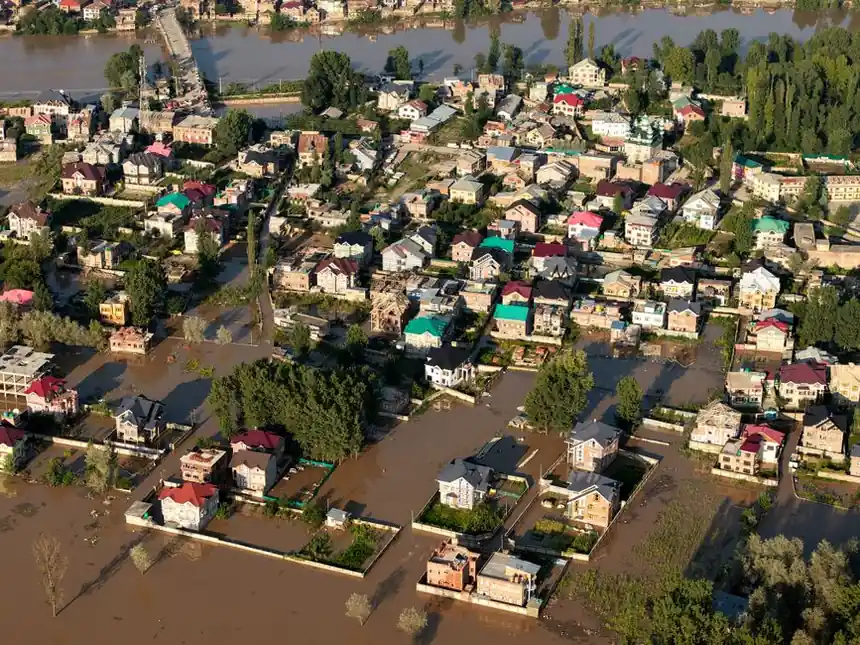
Emergency water cleanup in Hallandale Beach during hurricane season is the process of extracting storm water from your home within the first 24 to 48 hours, drying the structure with commercial air movers and dehumidifiers, and treating wet materials so mold does not take hold. The single most important number to remember is 48 - after two days of standing water in South Florida heat, mold colonies start colonizing drywall, baseboards, and cabinet backs.
We run these calls every June through November, and the pattern is always the same: a homeowner calls at 2 a.m. with water halfway up the hallway, and the difference between a $1,800 cleanup and a $14,000 rebuild is how fast a crew gets there. Here is what actually happens, what it costs in 2026, and how to prepare before the next named storm spins up in the Atlantic.
Why Hallandale Beach floods so fast during hurricane season
Hallandale Beach floods fast because the city sits at 6 to 10 feet above sea level on a barrier-adjacent strip between the Intracoastal Waterway and the Atlantic, and its storm drainage system was designed for afternoon thunderstorms, not 10-inch rain events. When a tropical system stalls offshore, three things happen at once.
First, storm surge pushes water up the Intracoastal and into the canals that thread through the city. Second, the ground is already saturated from days of feeder bands, so rain has nowhere to go but into streets and ground-floor units. Third, the drainage outfalls that normally dump into the Intracoastal are blocked by high tide - the water has nowhere to exit.
We see this repeatedly in the low-lying pockets along the Water Damage Restoration in Hallandale Beach Boulevard Corridor, where a single blocked catch basin can put 4 inches of water into a first-floor condo within an hour. The same thing happens in the older mid-rises near Water Damage Restoration in South Ocean Drive, where salt-air corrosion has eaten through 30-year-old cast-iron drain stacks and a storm-driven pressure surge cracks them wide open.
It is not just the coast. Inland neighborhoods like Water Damage Restoration in Pembroke Road Corridor get hit by freshwater flooding when the C-10 canal backs up. And the canal-side communities around Water Damage Restoration in Golden Isles deal with a specific problem: when the Intracoastal rises, the seawalls do their job, but the ground-floor garages and storage rooms behind them take on water through the slab.
What emergency water cleanup actually involves
Emergency water cleanup is not a shop vac and a fan. It is a measured, documented process that follows the IICRC S500 standard for water damage restoration, and it has six stages.
- Emergency contact and triage. We ask three questions on the phone: how deep is the water, is it clean or contaminated, and is the power off. That determines what crew and equipment we send.
- Water extraction. Truck-mounted extraction units pull 20 to 30 gallons per minute, which is 10 to 15 times faster than a portable wet vac. A 1,200-square-foot condo with 2 inches of standing water is usually dry to the touch in 3 to 5 hours.
- Moisture mapping. We use thermal imaging cameras and pin-type moisture meters to find water that has wicked up drywall, under tile, and into wall cavities. Water travels 8 to 12 feet laterally through a slab, so the wet spot is rarely where the puddle is.
- Drying. Commercial dehumidifiers and air movers run for 3 to 5 days. We target 60 to 80 grains per pound of specific humidity and check readings every 24 hours.
- Antimicrobial treatment. Any water that touched the ground outside - which is all storm water - is Category 3 (grossly contaminated). We treat affected surfaces with an EPA-registered antimicrobial.
- Documentation. Moisture readings, photos, and a drying log. Your insurance adjuster will ask for these, and without them, storm claims get denied.
If the water came in through a failed supply line rather than the storm, the job looks different - that is clean Category 1 water, and it falls under water leak restoration in Hallandale, Florida. Storm water is always treated as contaminated, even if it looks clear.
How fast can emergency water cleanup arrive in Hallandale Beach during a storm?
We target 60 to 90 minutes for arrival anywhere in Hallandale Beach, but during an active named storm, arrival times stretch to 2 to 4 hours because of bridge closures, downed power lines, and road flooding. That is the honest answer, and any company that promises 30-minute response in the middle of a hurricane is not being straight with you.
What matters more than raw speed is whether the crew can actually work when they get there. We stage equipment before landfall - truck-mounted extractors, desiccant dehumidifiers, and generators - so we are not waiting on a supply run after the storm passes. If your power is out, we run on generator. If the elevator is down in your high-rise, we carry equipment up the stairwell.
Call volume after a major storm is 20 to 40 times normal. We triage by severity: active water intrusion first, standing water second, damp materials third. If you have 6 inches of water in a ground-floor unit, you go ahead of someone with a wet carpet in a second-floor bedroom.
How much does emergency water cleanup cost in Hallandale Beach during hurricane season?
Typical 2026 pricing in Hallandale Beach runs $1,800 to $3,500 for a 1,000-square-foot condo with 1 to 2 inches of storm water, and $4,500 to $9,000 for a 2,000-square-foot single-family home with water in multiple rooms. Those numbers include extraction, drying equipment, antimicrobial treatment, and monitoring.
Here is what drives the price up:
- Water category. Category 3 (storm water, sewage backup) costs 30 to 50 percent more than Category 1 because of containment and disposal requirements.
- Square footage affected. Drying equipment is rented by the day, and a 2,000-square-foot job needs roughly 12 air movers and 3 dehumidifiers versus 5 and 1 for a small condo.
- Materials. Carpet and pad almost always get removed and disposed of after storm flooding. Drywall that has been wet for more than 48 hours gets cut 12 inches above the water line.
- Access. High-rise jobs with elevator outages add labor. So do crawl spaces and attics.
- Mold. If mold is already visible, you are now paying for remediation, not just cleanup. That is a separate scope and typically adds $2,000 to $6,000.
Most homeowner policies in Florida cover storm-driven water intrusion, and we work directly with adjusters. We give you a written scope and price before we start, and we do not add line items mid-job without your approval.
Can emergency water cleanup in Hallandale Beach prevent mold after a hurricane?
Yes - if extraction and drying start within 24 to 48 hours, you can almost always prevent mold growth. After 72 hours in 80-degree South Florida indoor air, mold colonization is effectively guaranteed on wet organic materials.
The math is simple. Mold spores need three things: moisture, organic food (drywall paper, wood framing, carpet backing), and warmth. Hallandale Beach supplies the warmth year-round. You cannot remove the food source, so the only lever you control is moisture - and that means getting the structure below 16 percent moisture content on a pin meter within 3 to 5 days.
We have pulled drywall in Hallandale condos where the homeowner waited four days after the storm passed. By then, the back of the drywall was black with Stachybotrys and the job had shifted from cleanup to full mold remediation after water damage in Hallandale, Florida. That is a $3,000 cleanup that became a $12,000 remediation and rebuild.
Two things make mold worse in this city specifically. First, most Hallandale Beach housing stock is concrete block with furring strips and drywall - the block itself does not grow mold, but the furring strips and drywall do, and they are hidden behind the wall surface. Second, the humidity never drops below 70 percent, so once a wall cavity is wet, it stays wet unless you actively dry it.
How to prepare for hurricane season water cleanup in Hallandale Beach
Preparation is what separates a two-day cleanup from a two-month rebuild. Here is what we tell every Hallandale Beach homeowner to do before June 1.
- Know where your shutoffs are. Main water shutoff, and the breaker panel. If your unit floods, killing power to the affected area prevents electrocution and stops the AC from circulating contaminated air.
- Photograph everything now. Open cabinets, closets, and the garage. Insurance adjusters want pre-loss photos, and most homeowners do not have them.
- Move valuables off the floor. Anything within 12 inches of a ground-floor slab is in the flood zone. Electronics, documents, and irreplaceable items go up.
- Check your flood coverage. Standard Florida homeowner policies cover wind-driven rain but not rising water. Flood insurance is a separate policy through FEMA or a private carrier, and it has a 30-day waiting period - you cannot buy it the day before a storm.
- Clear your drains and gutters. A clogged balcony drain sends water into your unit instead of off it. This is the number one cause of high-rise water intrusion we see.
- Have a restoration company's number saved. Not the one you Google at 3 a.m. during a storm. Save it now.
If you are in a high-rise, also check the building's emergency plan. Some Hallandale Beach condos shut off water to the whole stack after a storm to prevent cross-contamination, and you need to know that before it happens.
Common mistakes we see after storm flooding
The mistakes are consistent, and every one of them costs money.
- Waiting for the insurance adjuster before starting cleanup. Your policy requires you to mitigate further damage. Waiting three days for an adjuster while your walls soak is grounds for a denied claim.
- Using a shop vac and a box fan. A shop vac removes surface water. It does not dry a wall cavity, and a box fan pushes humid air around without removing it. You need a dehumidifier, and you need it running continuously.
- Running the AC to "dry things out." Your AC removes some humidity, but it also pulls air through wet ductwork and distributes mold spores through the whole unit.
- Pulling up carpet but leaving the pad. The pad is a sponge. If it is wet, it goes in the dumpster.
- Bleaching the surface and calling it done. Bleach kills mold on non-porous surfaces. It does not penetrate drywall or wood, so the mold comes back in two weeks.
- Not documenting. No photos, no moisture readings, no drying log means no claim.
When to call a professional
Call us when any of these are true: water has been standing for more than 12 hours, the water came from outside (storm, sewage, ground), the affected area is larger than 10 square feet, you can smell mustiness, or you see any discoloration on drywall or baseboards.
Water Damage Restoration Hallandale handles storm water damage cleanup in Hallandale Beach with truck-mounted extraction, commercial drying equipment, and direct insurance billing. We are available 24/7 through hurricane season and we give you a written scope and price before we start.
If you are dealing with a smaller, contained issue - a toilet that overflowed during a power outage, for example - we also handle toilet overflow cleanup in Hallandale, Florida as a same-day service. And if the water came in through the roof or a window during the storm, that often means ceiling and wall damage that needs water damage mitigation in Hallandale, Florida to stop it from spreading.
Frequently Asked Questions
How much does emergency water cleanup cost in Hallandale Beach during hurricane season?
Expect $1,800 to $3,500 for a 1,000-square-foot condo with 1 to 2 inches of storm water, and $4,500 to $9,000 for a 2,000-square-foot home. Storm water is Category 3, so it costs 30 to 50 percent more than a clean-water pipe leak. Most Florida homeowner policies cover storm-driven intrusion.
Who offers emergency water cleanup in Hallandale Beach Florida?
Water Damage Restoration Hallandale provides 24/7 emergency water cleanup across Hallandale Beach, Golden Isles, Three Islands, and the surrounding corridors. We run truck-mounted extraction, commercial dehumidifiers, and antimicrobial treatment, and we bill insurance directly. Call (833) 321-7153.
Does emergency water cleanup in Hallandale Beach work during hurricanes?
Yes, with caveats. We stage equipment before landfall and run on generators if power is out. During active hurricane conditions, arrival times stretch to 2 to 4 hours because of bridge closures and flooded roads. We triage by severity - active intrusion first, standing water second.
How fast can emergency water cleanup arrive in Hallandale Beach during a storm?
We target 60 to 90 minutes in normal conditions and 2 to 4 hours during an active named storm. Road flooding, downed lines, and bridge closures are the limiting factors. Call volume after a major storm runs 20 to 40 times normal, so we prioritize by water depth and contamination level.
Can emergency water cleanup in Hallandale Beach prevent mold after a hurricane?
Yes, if extraction and drying start within 24 to 48 hours. After 72 hours in 80-degree indoor air, mold colonization on wet drywall and wood is effectively guaranteed. We dry structures to below 16 percent moisture content on a pin meter, which stops mold before it starts.
Get help with Water Damage Restoration in Hallandale
If storm water is in your home right now, every hour you wait adds cost. We extract, dry, and document the job so your insurance claim holds up - and we do it 24/7 through hurricane season.
Call (833) 321-7153 and we will dispatch a crew to your Hallandale Beach address.